Showing posts with label School. Show all posts

11.5.15

Talking about sex and sexuality in school and at home

I grew up sensing that sex is not a topic of discussion. A tension between fascination and secrecy surrounded any mention of words related to sex. More than shame, embarrassment was the basic reaction I remember noticing around me. You just don't talk about it.

When I was in grade 4 the nurse came to talk with us about puberty. The most that she managed was to ask the class to be quiet and listen. The content of her talk has never registered in my memory. Kids around me were giggling and poking each other. I remember myself as a naive and curious boy. I wanted to hear a bit about this process that I already started to feel happening in me. The nurse never covered any topic of significance. If anything, she might have been just as nervous as the rest of my class.

My only claim to knowing better than when I was in grade 4 is having a grade 5 daughter. When she told me about the nurse that was about to talk with them about puberty, I thought "What is it about that poor nurse having to talk with kids in school about sex?".

There seems to be a social cloudiness surrounding issues of body, sex and sexuality. Talking about our intimate body areas involves … intimacy; the emotional journey our kids are going through or are about to go through is different with every kid and family; the availability of information today is both a blessing and a risk. In light of the layered difficulties surrounding the topic, the formal delivery of education relating to sex and sexuality is probably not enough. It's not that I have anything against the nurse talking with kids about puberty. From the handout I saw, it all looked pretty useful.

Then it struck me. Sex is fun. Sexuality is all about life. The school nurse usually deals with injuries and emergency. This ties too well with the apparent difficulty we have in society to discuss the intimate issues of life. I think we are capable of delivering a much more positive message to the audience we care most about.

We don't have to force that message upon them. Usually kids don't talk or don't want to talk much about what's going on in school. But when they do try to engage in conversation it looks to me like a good idea to be prepared. A workshop with a professional sex educator is one way of having a healthy discussion that can also be fun. We all have different ways of raising kids. We all have questions and advice. But when it comes to sex, a professional educator can help in dissolving the cloud surrounding this topic. The workshop is a stepping stone in a journey that can be exploratory yet safe.

How much practice does any of us have in life to talk about sex in a serious yet fun way? A sex educator has exposure to the experiences of many people. This exposure allows for uniquely individual questions to be addressed based on the wealth of a broad reference.

As I was thinking of raising the issue at our PAC meeting, a quick search resulted in a variety of options. There are many books out there and also web pages that provide reviews of such books. When I typed 'sex educators BC' I didn't have to sift through endless porn sites as I had anticipated.  But then, as the days went by, "my topic" became a news item. One weekend I read an article by an awarded journalist. The next weekend covered the Ontario clash around the new Sex Ed curriculum.

Here in BC, there are already calls to revisit and possibly review it. But until that happens, parents of kids who are currently in elementary school need more immediate solutions. We can employ available resources as a group for the benefit of our own family as well as society at large.

Instead of worrying, I observe life as it presents itself to me. My own past is merely a reference point. When it comes to providing a healthy launching pad for my daughter, my observations turn into insights and guidance. Our school and its PAC provide an extended opportunity to nurture a broader connection. That connection itself provides the base for the healthy sex ed we are all hoping for. 

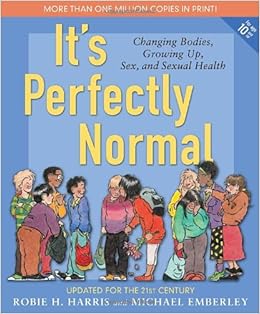
The books we have at home:
  

From the Media:
Why improve rant (Elizabeth Renzetti)
My sexual education (Sierra Skye Gemma)

Ontario Sex Ed (Globe&Mail Editorial)
Comparison between provinces (Global News)
Improve teache training (Globe&Mail)

Videos for discussion at a future PAC meeting:
Marnie Goldenberg (< Click to reach website):

Saleema Noon (< Click to reach website):

14.12.14

Candy as reward in school


You might not agree with any of the sides in a debate as much as you support one. The teachers' strike that started in June 2014 lasted into October. This was a grim reminder for parents of their helplessness in the power struggles between the politics of society and the politics of its unions. Finally when teachers were back in class the sense of relief was accompanied by renewed awareness: we - parents - have a considerable responsibility to keep our eyes open to make sure our interests are not compromised.

A few years ago when our daughter was in grade three we’ve already had a short exchange with her teacher. Last year, with another teacher, there wasn’t much discussion on that topic but we had a sense that there’s still something going on. Not too bad: our daughter is really careful and responsible. When it comes to school and candies, school and sweets, I’ve noticed that the challenge of keeping our kids away from stuffing themselves is a complex one. We have Halloween and Christmas, this event and that. And we have teachers handing candies as rewards in class.

I’m sure we all want to see our kids encouraged by their educators to excel. But again, I don’t enjoy the realization that candies are used as rewards by teachers. For me and my wife candies and sweets should stay out of the toolbox. When I say toolbox, I mean the various methods teachers use to engage with students in class.

I would be more than happy to realize all parents, staff and admin agree with us. However, reality usually has its own way of living. There is a debate over this issue that can be seen through quick browsing on the web. The following is a small sampling.

“As parents, we help our kids develop the lens through which they see food. Will they see snacks as something to do when they watch TV or are bored or will they snack as a way to refuel between meals? Will they seek sweets as a reward for their hard work or look for other constructive ways to feel good?” (source)
"Giving children candy as a reward is like saying, ‘Here is something that is not very healthy for you as a reward for being good.’ Does this make sense?” (source)
Just Say NO to Food Rewards (source)
Student rewards…that aren’t junk food! (source)
Eliminating ‘candy bribery’ in schools (source)
Other Links: PDf detailing constructive rewards; PDF of an article in oposition to candy giving in class; Debate platform with room for comments and voting;

Many kids, maybe to a degree all kids, see school and teachers as a source of authority even if one to challenge. The use of candy as reward is nutritionally unhealthy and morally questionable. Rewarding with candy can backfire on many levels in the future. However, my guess is that this topic is one that parents and educators alike are a bit confused with, maybe embarrassed or even unaware of its importance.

Nevertheless keeping this discussion open and ongoing is an opportunity to better understanding between us, members of a fragmented community with a mutual interest: successful growth and development of our kids.

Your Inner Mars Bar

This is a story from when our daughter was about six.
Inbal heard me talk about chocolate when we’d finished dinner and learned to know that I was just talking about it. We were not going to have any.
Suddenly she just started crying and nothing really made sense. No matter what we said she kept crying and the tears, pouring out her eyes seemed like a leaking roof on a rainy night. In an effort to find a way out of the tragedy I told her (knowing it won’t work but what tha heck) that I like sweets too. 
"I walk past the candy bars at Safeway many times" I told here, "There were occasions when I’d purchased a Mars Bar and enjoyed it. But in general, sweets are not healthy food and we try not to eat too many of them. It’s been quite a while now that I pass beside the Mars Bars and tell them: 'today I am NOT going to eat you'.”
Inbal’s gaze changed from miserable weeping to compassionate curiosity:
“Next time when you don’t eat the Mars Bar bring it to me”.
And this was it. The crying stopped.
 - - - - - - - - - - - - - - - - - - - - - - - - - - - -
The challenge of keeping our kids away from stuffing themselves is a complex one. This post is a side story to another one in response to the use of candy as reward in school.

27.8.14

Fresh Roots Dig It

In our daughter's School's exploration of adding value to the educational experience, we've had a discussion with Fresh Roots.


On their website they say that they "transform underutilized spaces into thriving gathering places through urban agriculture. More than growing a garden, we grow community."


A quick visit to one of their locations in Vancouver allowed me to get an impression of what that transformation could look like.


In Norquay School, there is a nice play area, a few planting beds and vast gravel surfaces where kids roam in breaks and after school hours.


What my crappy phone-camera managed to capture is a compelling proposition for at least some of our school's yard.


Some of the photos are not that bad actually and of course that's not the point of teaming up with Fresh Roots.


Urban societies today are in a fascinating crossroads of defining many of their habits, including the act of farming their own produce.


Exposing kids to the possibilities at school age seems like a healthy way of keeping them connected to their source of life and hands on understanding of what sustainability could mean.


Farming is a labor intensive engagement. The friendly people at Fresh Roots may encourage more of us to reclaim the fun that is also part of it.


This Back Yard farming operation is located at the Vancouver Technical Secondary.

21.3.13

See me and Julio down at the... PAC meeting

My first visit to a PAC meeting might be remembered by some for my proposal to call teachers by name… First name that is. I certainly remember the reaction of some to my proposal: vehement rejection.
When I was considering raising the issue it seemed to me almost like a non issue that maybe I shouldn't bother with. My vision of it was that people would just nod and say sure, why not. After all, we are in the 21st century.
It turns out I don’t know people that well. Do I know what PAC is? Is it Council or Committee... ? Well, it’s Council: “All parents/guardians of children in a school are members of the Parent Advisory Council” (from the School Board’s Handbook).
So here I am, almost three years as a parent of a child in school; still learning what this whole education system is all about; still trying to remember people’s names when I recognize their face. Anat and I try to alternate in attending PAC meetings so that the burden (and sometimes boredom) is shared.
Yes, you don’t have to be there to be a member. Before we know it, our daughter is eighteen and…, yeah, what century are we still in?