24.4.15

The U-turn guy

As the car suddenly swerved towards me, I realized the guy driving it hadn't noticed me.

Cycling south on Shoken Street, a median separated road, between Salame Street and Glilot Way, used to be a typical morning commute for me. The street rises and descends in both directions. My apartment was located in the low rent but lively South of Tel Aviv. The ride was a seven kilometer stretch to the design school in the adjacent city of Holon.


There wasn't much time, neither a lot else to do but kick my way to safety. I lifted my left foot straight into the back right door of the car. This stabilized my violent change of direction. At the same time the driver got a clear signal that something wrong was happening.

His U-turn maneuver was a legal one. His neglect to notice me - the cyclist with the right of way - probably was not.


However, as soon as he heard the crashing sound of my shoe bending the metal of his car, his head turned and he saw me. He stopped. But I was still pedaling uphill, a few inches away from the right side of the car that had almost killed me. I was partly startled, partly happy everything was OK and mostly annoyed by the disruption.


When the man saw that I continued my ride, he accelerated beside me and cut me again to make me stop. At that moment the last thing I wanted was to be bothered with him. I changed course and kept going uphill, this time to the left of the car. But now he jumped out and latched onto my handlebar.


Driver: "You kicked my car!"

Cyclist: "You almost killed me..., what d'you want?"
"No, come with me. You kicked my car!"
"Nothing happened. Let go of my bike."
"No! You come with me first."
"You almost killed me. Nothing happened to your car. Let go of my bike and I'll show you."
"No! If I let go you'll run away again."
"You almost killed me. Let go of my bike first."

At that moment a passer by was beside us. He told the driver that he saw him almost run over me. The look on the driver's face changed in realization into a gaze of fear. He let go of my bike and I joined him to look at the spot where I'd kicked his back door.


The crashing sound of my kick was that of sheet metal bending in and out again. As much as I was focused on surviving an emergency, seeing that was amusing. My confrontation with the driver gradually added to my sense of comedy.


"You see? Nothing happened. Have a good day."

Driver: "You,... you speak like someone with a ring in his ear!"

I smiled and continued with my ride.

- - - - - - - - - - - - - - - - - - - - - - - - - - - - - - -
Walking and biking in the city has its merits as well as its challenges. All journeys have a story. It is either immediately evident or only reveals its beauty years later when you pull it out of your memory. I was reminded of the story above, from 1990, as I brushed against a moving car here in Vancouver last year. I was crawling with the traffic down Main Street when the car to my left tried to pull right into 6th Avenue. As soon as the driver noticed this, he slammed the brakes. We quickly and peacefully parted ways as nothing happened to any of us.


23.4.15

Time for walking, time for talking

Marylee and I were discussing a jog one day. In her interest to show me some of the lovely birds you can notice anywhere you go in the city it was just a matter of finding the right day. At about 8 am it takes a while until I manage to board the Skytrain. Then another fifteen minutes pass and I am at the Lonsdale Quay where we get together on a sunny April morning.

Apart from birds, Marylee takes photos and videos of urban action of interest. She is a storyteller, who is busy living her life to the fullest. I have recently helped her set up a blog dedicated to documenting those jogs she takes. Gradually we are going through the various tools in WordPress that allow you to share your stuff out in the world.
A wide variety of landscapes can be experienced when you let yourself wander without constraints of time.
Using the path making tool in Google Maps is not perfect in terms of interface but it works. The first walk we had together turned out to be about 5.5 KM long. Strangely there is a bridge spanning the Mosquito Creek's flow into the bay that is inaccessible to the general public. The Squamish Nation Reserve has private property signs along its roads. As pedestrians we take the liberty to use them instead of the noisy streets surrounding the reserve. We later walk beside the heavy traffic on our way back to the Quay.
If you have patience, you might get a shot of the heron shooting at a stray fish. Not much luck this time for me.
Many ducks can be seen in and out of the water. In the sky you can notice seagulls, crows and ravens. Within the Vancouver Shipyards territory, an eagles' nest can be seen high up atop one of the massive cranes. How well the birds are faring is hard for me to know. Some of the challenges for urban wildlife are documented by organizations such as the Vancouver Avian Research Centre.
At least when this guy moved, the spread of its wings was magnificent.
Our walk continues on the Spirit Trail that has steadily evolved since the first decade of the millennium. The lovely pedestrian bridge over the train tracks takes us to 1st street west, where we head back east. We take one of the patterned crosswalks to get to the north side walk. The traffic is pretty heavy now. We grab a coffee and a tea to chat a bit about Galapagos and Darwin. Marylee is working on the third edition of her book. I am in the middle of reading a biography of Darwin written by Janet Browne.

We called this a Jalk. Marylee is the one of us jogging. For me the pace is quick walking. The point is having a good balance of exercise and companionship. Along the way we enjoy the scenery that is changing as we move in space. Our memories and projections notice the changes that the scenery is going through in time as well.
I got to know of the Spirit Trail through one of my submissions for public art in North Vancouver. The patterned crosswalks are another feature of this city's care for the public realm.

2.3.15

Skytrain Express

I pretty much hate these ads, but they reflect real life experiences
The plebiscite is round the corner and the discussions around it seem to excite or frustrate everyone involved. However, whether you vote YES or NO, my hope is that the pressure to fix the systems that were made to serve us continues. The current debate, as irrelevant to the issue as it sometimes seems, raises our awareness to the ills that plague public institutions and governance.

I really enjoy riding the Skytrain. I don't enjoy buses as much but they have their merit. Public transport is just another tool within a complex array of services that sustain our society. It's up to our elected officials to best maintain and develop this tool. It's up to us to use this tool for our benefit.

At times, we need to take responsibility, whether it's a vote or unexpected interaction with each other. When I see the posters calling people to say something when they see something I have mixed feelings. I agree with the message but it's just a lot more complex than that. The following story, I'm sure, is just another drop in the endless examples for choices we face. Whether you say or do something, nothing can promise you - in the moment of action - that you're doing the right thing.


Young man eats sandwich.

He is sitting close to the Skytrain floor.

His portable piano's case serves as a bench.

The case stretches from side to side in the passage of the articulated cabin.

People are hesitant.

The moving train is full of them.

Tall guy asks young man "are you waiting for someone to ask you to move?"

Young man explodes "can't you see I'm eating?!"

Tall guy looks him in the eye considering the exchange.

"What?!", the young man continues, "the train is full. Can't you see I have nowhere to sit?"

Tall guy responds in a calm voice "you're blocking the way".

The exchange escalates asymmetrically: young man shouts and yells - tall guy stays calm until,

Young man exclaims "what are you, a security officer?!"

Tall guy picks up on the opportunity: "No, but I can call one for you if you like".

Young man picks up his piano in rage and stands beside the wall.

His beverage is left in the middle of the floor; his sandwich paper bag drops off. "Why are you bullying me, taking advantage of your age over a younger person?"

Train stops. People rush out the doors. New passengers board the train.

"Happy now?!" young man continues his charge. "It's all about you, isn't it?! You feel better with yourself, now that you’re a hero?"

Tall guy looks him in the eye and says "Not really, do you need a hand with your cup?"

"What is it with you, I need to eat before a practice session with my band" young man whines. "Now look what you've done! I'm shaking all over. Because of you I'm going to throw up"

"Sorry I'm making it so hard on you. Do you need a hand with your cup and paper bag?"

Train stops. People rush out the doors. More passengers board the train.

Young man realizes it's his stop.

He reaches the doors just before they shut.

Tall guy picks up disposable cup and paper bag and follows young man.

Young man barely squeezes out onto the station's platform.

Tall guy stretches his hand out the gap.

Young man asks in disgust mixed with fear "Now what do you want to do to me?!"

Tall guy, now on the platform, avoids him.


I walk to the nearest garbage bin. Through the open lid, I slip the paper bag into the bin and place the paper cup on top.

"There you are", I point to the cup, then turn back to the edge of the platform and wait for the next train.

Young man picks up his cup of coffee and rushes away.
- - - - - - - - - - - - -

A few days later, I am on the Skytrain heading out of Downtown Vancouver. The car is filling up quickly. I stand beside the single seat right by the sliding doors. On one side a half curtain - partly opaque, partly transparent - separates the seat from the sliding doors. Its other side is just a few inches away from the bench arranged perpendicular to the car’s wall. It is conveniently inviting to rest your feet on it even if your shoes will no doubt soil it on a rainy day.

On a crowded train like we are now on, a young woman is diligently texting on her device. Her shoulder leans on the car’s wall. A couple enters and stands beside me. The man looks down at the empty single seat. He budges closer to the chair hoping to signal his desire to sit down. The young woman continues to text. The man’s accomplice, possibly younger, encourages him to sit. As he bends backwards, the young texter slides her feet ever so slightly but not enough to allow the man to fully lean all the way back.

He sits at the edge of the seat. A few seconds later he leans his head on the divider. Not knowing whether to say something to the texter I decide to approach the guy. I crotch so that our eyes make contact and say, “you can feel free to ask her to move her legs”. He looks at me, then at his accomplice. I realize he doesn’t speak English. I tell the young woman the same thing, then, “I can ask her to do that if you like”. She translates this to him and they both smile, somewhat embarrassed, a little grateful.

The texter, not at all oblivious to the exchange removes her legs from the seat. “He didn’t seem to care”, she says. The man slides all the way back to comfort. “You didn’t seem to care either”, I say and stand up to continue my ride. My time to get off comes and I'm out of there.

It’s a strange sense of relief. I can’t help trying to exist. I don’t feel that I want or need that kind of being in my life. But it does make a positive difference. "So be it!"

1.1.15

The Age of Walking

In  a high end fashion shop in Tel Aviv I am curiously browsing through items that seem pointless to consider for my then bachelor condition. Even in my current marital status I would probably avoid spending the amounts marked on the labels in that shop. This happened sometime before my moving to Canada. A man approaches me dressed up in a suite and tie and asks me for directions to a place that is a fair distance away.

I ask the shop attendant whether they have a phonebook so that its map will facilitate my response. As I show him our location and point to his destination I ask him whether he intends to ride or walk. Each decision would result in a slightly different route. The guy takes my question as an implication of a different kind and asks “Why, do you think I’m too old to walk there?” I smile and say that even people my age occasionally take a car or a bus for that distance.

“How old are you?” he asks in a politely confrontational smile.
“Thirty three” I say.
His smile changes into a gaze of recognition.
“Oh. I’m ninety...” he says.

We greet each other farewell and the man steps out to continue his walk.

14.12.14

Candy as reward in school


You might not agree with any of the sides in a debate as much as you support one. The teachers' strike that started in June 2014 lasted into October. This was a grim reminder for parents of their helplessness in the power struggles between the politics of society and the politics of its unions. Finally when teachers were back in class the sense of relief was accompanied by renewed awareness: we - parents - have a considerable responsibility to keep our eyes open to make sure our interests are not compromised.

A few years ago when our daughter was in grade three we’ve already had a short exchange with her teacher. Last year, with another teacher, there wasn’t much discussion on that topic but we had a sense that there’s still something going on. Not too bad: our daughter is really careful and responsible. When it comes to school and candies, school and sweets, I’ve noticed that the challenge of keeping our kids away from stuffing themselves is a complex one. We have Halloween and Christmas, this event and that. And we have teachers handing candies as rewards in class.

I’m sure we all want to see our kids encouraged by their educators to excel. But again, I don’t enjoy the realization that candies are used as rewards by teachers. For me and my wife candies and sweets should stay out of the toolbox. When I say toolbox, I mean the various methods teachers use to engage with students in class.

I would be more than happy to realize all parents, staff and admin agree with us. However, reality usually has its own way of living. There is a debate over this issue that can be seen through quick browsing on the web. The following is a small sampling.

“As parents, we help our kids develop the lens through which they see food. Will they see snacks as something to do when they watch TV or are bored or will they snack as a way to refuel between meals? Will they seek sweets as a reward for their hard work or look for other constructive ways to feel good?” (source)
"Giving children candy as a reward is like saying, ‘Here is something that is not very healthy for you as a reward for being good.’ Does this make sense?” (source)
Just Say NO to Food Rewards (source)
Student rewards…that aren’t junk food! (source)
Eliminating ‘candy bribery’ in schools (source)
Other Links: PDf detailing constructive rewards; PDF of an article in oposition to candy giving in class; Debate platform with room for comments and voting;

Many kids, maybe to a degree all kids, see school and teachers as a source of authority even if one to challenge. The use of candy as reward is nutritionally unhealthy and morally questionable. Rewarding with candy can backfire on many levels in the future. However, my guess is that this topic is one that parents and educators alike are a bit confused with, maybe embarrassed or even unaware of its importance.

Nevertheless keeping this discussion open and ongoing is an opportunity to better understanding between us, members of a fragmented community with a mutual interest: successful growth and development of our kids.

Your Inner Mars Bar

This is a story from when our daughter was about six.
Inbal heard me talk about chocolate when we’d finished dinner and learned to know that I was just talking about it. We were not going to have any.
Suddenly she just started crying and nothing really made sense. No matter what we said she kept crying and the tears, pouring out her eyes seemed like a leaking roof on a rainy night. In an effort to find a way out of the tragedy I told her (knowing it won’t work but what tha heck) that I like sweets too. 
"I walk past the candy bars at Safeway many times" I told here, "There were occasions when I’d purchased a Mars Bar and enjoyed it. But in general, sweets are not healthy food and we try not to eat too many of them. It’s been quite a while now that I pass beside the Mars Bars and tell them: 'today I am NOT going to eat you'.”
Inbal’s gaze changed from miserable weeping to compassionate curiosity:
“Next time when you don’t eat the Mars Bar bring it to me”.
And this was it. The crying stopped.
 - - - - - - - - - - - - - - - - - - - - - - - - - - - -
The challenge of keeping our kids away from stuffing themselves is a complex one. This post is a side story to another one in response to the use of candy as reward in school.

17.10.14

Audience Looking for a Story

Process needs a storyboard; results need an audience.
Some breaking is done by hand, other times tools are used
I've been developing a glass mosaic making course in the last few weeks. Starting with a discussion at Kona Stained Glass on Knight & 33rd, I wanted to get my hands "dirty" so that I can get a sense of what my students are about to experience.
Cutting glass is magical. You scratch the surface slightly and with very little pressure you drive the whole piece to open into two. Even with a straight line it still fascinates me to hold my fingers at the base of the score line and crack my door into the material. But then come the meandering lines. The glass can just as easily follow your path.
Starting with the image of an actual scene, surfaces are defined to generate the proposed concept.
Not everyone who joins a glass mosaic making course is comfortable or skilled enough to plunge into every step of the way with confidence. This is why people sign up to take courses in the first place. You might not expect all the revelations that will inspire you to continue but you sure hope to get rewarded for your investment.
Dividing the surface into a grid generates a playful module
But the making of mosaics is not about mosaics and not about making. It's about storytelling. The story is personal and evolving. It can be the process of making the mosaic piece that will become the story; what brought you here can be part of it; and maybe there's an image that bubbled inside your head that is waiting to be expressed.
The better the pieces fit together - the better the result
Who is the audience for this result and where in the storyboard can you see them coming from?

27.8.14

Fresh Roots Dig It

In our daughter's School's exploration of adding value to the educational experience, we've had a discussion with Fresh Roots.


On their website they say that they "transform underutilized spaces into thriving gathering places through urban agriculture. More than growing a garden, we grow community."


A quick visit to one of their locations in Vancouver allowed me to get an impression of what that transformation could look like.


In Norquay School, there is a nice play area, a few planting beds and vast gravel surfaces where kids roam in breaks and after school hours.


What my crappy phone-camera managed to capture is a compelling proposition for at least some of our school's yard.


Some of the photos are not that bad actually and of course that's not the point of teaming up with Fresh Roots.


Urban societies today are in a fascinating crossroads of defining many of their habits, including the act of farming their own produce.


Exposing kids to the possibilities at school age seems like a healthy way of keeping them connected to their source of life and hands on understanding of what sustainability could mean.


Farming is a labor intensive engagement. The friendly people at Fresh Roots may encourage more of us to reclaim the fun that is also part of it.


This Back Yard farming operation is located at the Vancouver Technical Secondary.

29.3.14

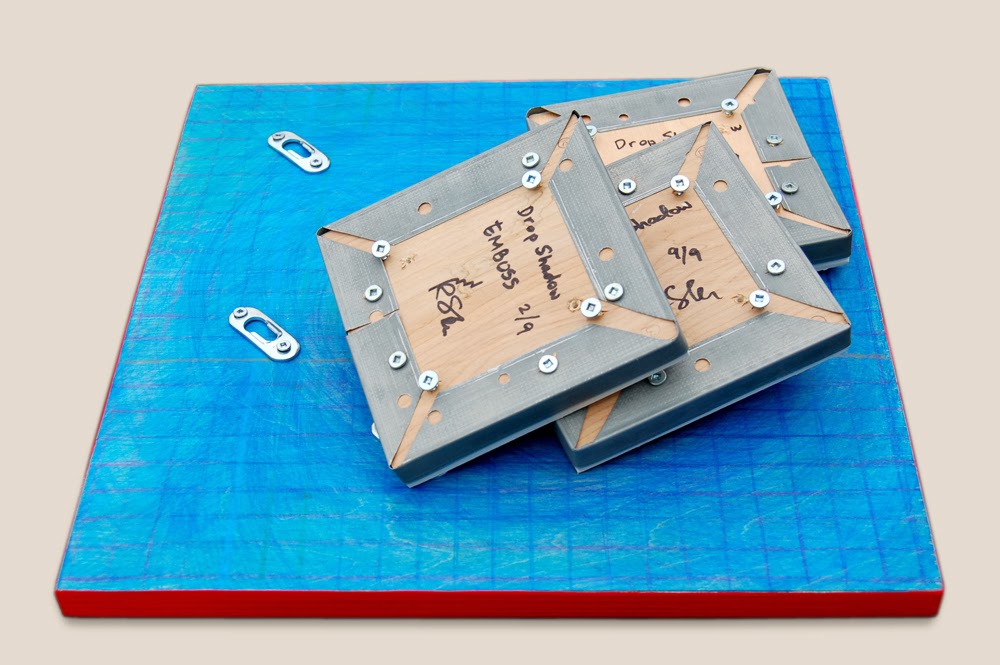
Drop Shadow - In The Making

I met Michael Shandrick at a design thinking event back in 2011. This whole series of documentation was inspired by a conversation I've had with him a short while ago. We were discussing processes. In response to his description of a script he was engaged in writing, I've asked him about the possibility of him posting the story. He seemed pretty intrigued by the idea. As we were exchanging more thoughts I've realized the same idea could apply to me. This is the fourth post following First Stages, Resurrection and Statement.
Just a minute or two before our walking tour of Vancouver in the Design Thinking unConference

As soon as I embark on the act of executing my thoughts, the process itself is a form of result. However, it is also an exploration. You could even see it as an adventure, where not all the answers are known. The creative process can be planned in detail yet reality imposes hurdles in many forms. Time and money are the most basic of them. Proper planning helps in balancing the many components that the process entails as it unfolds. However, people get sick, accidents happen, new ideas come up. You can't anticipate everything.
The beauty of a process exists in any of its stages.

'Drop Shadow' as a work of art is an analogy to this process. When I had started working on it, the plywood squares I was painting on, represented pixels of the digital world. Technically, I've placed them together as one surface and occasionally shuffled them to add a new layer of paint. That has generated a degree of arbitrariness to the composition. A pixel is like that. It is a sort of canvas that accommodates whatever info is directed in its way. When all the pixels together form an image that makes sense to us, communication exists.
Scale is a fascinating feature of space.

As my world expanded into the urban realm, my interest in reflecting that in my art inspired me to look at "my pixels" with a new sense of purpose. For me, a city is the most complex product of human society. Its most challenging complexity is the fact that we are one of its components - its most important one. Without the city our lives would be something else. Without us, it won't exist, or at least slowly degrade into oblivion (have a look at this).
Reflections happen with smooth surfaces, within computer programs and in your head.

In this process my camera and computer were used as painting accessories. Taking photos of the acrylic squares had allowed me to manipulate the image before continuing to add paint. The desktop monitor enabled an enhanced flexibility in viewing the work and experimenting. Planning and execution progressed very quickly following decisions made over a compelling variety of options. Plywood, as a building material, allowed me to cut existing pieces and further play with their layout.
The side of a building in construction where the concrete pouring "imperfections" are still evident. 

This layering of processes is what I find compelling in everything I do. Whether it is an idea or an object, a present reality or a vision for the future; when I look at them as raw material, my options of action are wide open. The story is the action that connects everything together. Each story sheds a light of its own on our existence.  Light and shadow play equal roles in our sense of space. If for no other reason, naming my project 'Drop Shadow' sounds almost inevitable.
- - - - - - - - - - - - - - - - - 
This post was actually posted on August 28 2014. I had meant to publish it on the date that appears here but simply lost  track of my list of drafted files. Interestingly, in Blogger you can control the publishing date to reflect your interests.

22.3.14

The making of Drop Shadow - Artist Staement

Among the layers of creation, a statement is the artist's way of articulating the outcome for the viewer. Whether this explains the work or adds mystery, is a matter of choice. I find it intriguing to provide a statement that is both. The previous two posts (First Stages; Resurrection) mainly dealt with the timeline of working on 'Drop Shadow'. Apart from beauty, I want my work to provoke thought and nurture discussion. Open minded communication with my audience can generate new ideas and insights. The following is my statement for the show in July.
Our built environment is a result of generations of growth and interaction. In this body of work I'm reflecting on components of life and setting them in a pattern that supports new directions. We all come together on an individual journey and find the commons we need. The city is a body with endless faces. The way from which you look at it can change how you feel about and in it.
'Drop Shadow' is a process in which I contemplate the move between stages, the changes in time and scale, the balance between resource and allocation. From a young age I've been intrigued by the constant development of tools available to us. When I started using Photoshop I very quickly developed a variety of processes that allowed me to generate the features we needed for my team's projects. Then a tool called drop-shadow was introduced that in a single click created most of what my process had involved.
The city is our most complex tool and changing it seems to be on a larger scale than we can imagine. Within the arbitrary motions of fitting components together, a sense of order evolves. This sense of order is a source of both strength and weakness in all of us, individuals and societies. The need for change repeatedly shows itself. The effort to change is many times bigger than what we've thought or even hoped it would be.
'Drop Shadow' is merely a work of art. My work on creating it involves traditional arts materials such as acrylics and pencils. However, computer and various hand tools were a significant contribution to the results at hand. In 2003 its various components were constructed in a certain way. Revisiting them more than a decade later has allowed me to relate the small scale of revitalizing their existence to my current state of engagement with urban design. The effort of tweaking an established body of work involves finding the right balance between existing conditions and the boundaries of my imagination; between past, present and future.
My search is in how to turn this effort into play.

15.3.14

The making of Drop Shadow - Resurrection

My previous post (Drop Shadow - First Stages) ended with me leaving my art stored since 2005 for a few years.
Then, in 2010 came my parents' 70th birthdays. It seemed like a great opportunity to take a look at what I've had and make something new out of it. This time, a square plywood board was selected to be the background and support for the whole composition. To make the small squares truly interactive, simple elements of hardware were employed. Making sure to work with an accurate template, I've installed screws at the back of each square so that one can insert each piece in any of the nine spots on the background board. I'm not sure my parents play with combinations of the various possibilities but they sure can, and that was my intention.
A little later I tried a down scaled version for a friend's wedding. Instead of a stained background I took a bunch of color pencils and worked on visually relating the pieces. Instead of nine squares floating above the surface I've selected three from the existing acrylics on plywood pieces.
Pressing the pencils on the background boards, there is a physical connection that forms between me and the surface. I enjoy the transparency of pencils where you can gradually add strokes and the color becomes more pronounced and still the color beneath shows itself. By contrast, acrylics tend to just cover the layer beneath. The difference between media supports my narrative of urban change: the effort of tweaking an established infrastructure involves finding the right balance between existing conditions and the boundaries of our imagination; between past, present and future.
My current state of the process is nearly ready with six pieces. They all use plywood boards as backgrounds and pencils in various degrees of application. There is a wide range of styles between them and still they seem to form a coherent family of objects. I am intrigued by how they will look when I'm done. Notice in the small works the similar pieces in blue. As my use of tools allows me to plan and anticipate the process, what I'm showing here is an approximately what they will be. On this, I will expand a bit later.

8.3.14

The making of Drop Shadow - First Stages

In July of 2014, my acrylics will be displayed in Bean Around The World coffee shop on Main street in Vancouver. Following a process of restructuring and re-purposing a set of pieces that were stored in my basement, the show I call Drop Shadow will go through what might be considered a resurrection.
After moving from Israel to Canada in 2002 I decided to explore in more detail the process of painting and dealing with artistic expression. My first encounter with canvas and acrylics had happened just a year or so before. That explosion of color and emotions had stayed with my friends Yoav and Michal. In Canada, instead of canvas, plywood, which was readily available to me, was selected as my surface of choice. Another item from the past has been, in general terms, the three dimensional nature of the result. I am used to looking for the relationships between elements in space. Some of my previous dealings with acrylics involved found objects that I had attached to the surface as part of the composition.
Metal and wooden frames; wire and mesh hanging systems
My process has yielded two types of framing: metal and wood. The frames, being part of the composition, were used as the structure that holds the plywood pieces suspended in the air. Here too, I came up with two versions:  wires intersecting each other to form a 3 x 3 grid and a mesh stretched between the members of the frame.
Conceptually I considered the plywood pieces to be placed in any of the locations available within the composition and any orientation. Eventually they were attached rigidly to the mesh or grid from behind. I didn't worry with this too much but knew I would come back to that issue sometime later.
Ground floor in Cuppa Joe coffee shop (2003)
Eight items hung on the walls of Cuppa Joe on 4th Avenue West for the month of April 2003. A gallery in Gastown was next to host my art. Unfortunately it shut down just before my turn came up for display. In August of the same year one of my pieces was juried into a group show on Granville Island. After that I was already busy developing my ceramic designs so the art stayed mostly in storage until September 2004.
Wave participated in the juried show Painting On The Edge
When my ceramic pieces were displayed for sale in a gallery in Steveston, Tamaka, the owner invited me to have my acrylics there as well. She had called me to pick up my paintings after about a year of moving around the walls of the gallery without a buyer. A day after that call, a woman from Germany came by and paid Tamaka for one item to be shipped abroad. Suddenly I could use the term "sold internationally". However, I was focused more on my design interests and kept my art stored for another few years.
Daubs was the first to be sold.
In the next post I will go through the process of reviving Drop Shadow: Resurrection.

28.1.14

Open Media with the Design Nerds

"The question mark is our exclamation mark," I say as we stand in front of the room. "We have to keep on asking questions so that the challenges we generate provide us with insight to better understand the realities we are facing. Education through a variety of sources and venues allows us to become informed so that the decisions we make sustain us within the society we live."


A Design Nerds Jam starts with an introduction by a speaker or two who provide the framework of the event. The guest host on Saturday, 25th of January was Reilly Yeo, Managing Director of OpenMedia.ca.  

- - - - - - - - - - - - - - - - - - - - - - - - - - - - - - - - - - - - - - - - - - - - - - - - - - - - - - - - - - - - 
Browsing through the questions posted on the walls, my feeling is that they come with a predetermined agenda.
SHOULD INTERNET AND CELL PHONE PROVIDERS BE ABLE TO MAKE IT MORE EXPENSIVE TO ACCESS CONTENT SERVICES THAT COMPETE WITH THEIR OWN?
This is a strange question. If anyone in the room has a business to run, wouldn't they want to be able to charge for their services or products so that they make profit that supports their livelihood and that of any of their employees?
ARE THERE CERTAIN SERVICES THAT ARE BLOCKED, OR CERTAIN SHOWS YOU CAN’T WATCH BECAUSE YOU ARE NOT SUBSCRIBED TO A SPECIFIC TV BUNDLE?
When you subscribe to a certain service, you're offered certain programming. It's up to me to negotiate the terms of our engagement with the company we are buying our services from. I have disconnected cable years ago and haven't felt like I've missed anything.
MUCH OF CANADA’S MEDIA CONTENT, NOTABLY LIVE SPORTS, IS CONTROLLED BY THE BIG TELECOMMUNICATIONS COMPANIES. SHOULD THIS CONTENT BE MADE  AVAILABLE AT A COST-BASED RATE TO ALL TV AND ONLINE SERVICE PROVIDERS AND THEIR CUSTOMERS?
I see "NOTABLY LIVE SPORTS" and think: "OK, we want better access to media content for what purpose?!" Isn't live sports a venue where the masses escape from meaningful participation in social issues? Well, I find the way this question is framed somewhat ironic.
SHOULD TELECOM COMPANIES HAVE THE ABILITY TO DETERMINE OR RESTRICT ACCESS TO PUBLIC MEDIA OUTLETS AND OTHER COMPETING SERVICES?MOST CANADIAN TELEVISION COMES FROM CNADA’S BIG TELECOMMUNICATIONS COMPANIES (I.E. BELL, ROGERS, SHAW AND QUEBECOR). THE MAIN EXCEPTIONS ARE PUBLIC MEDIA OUTLETS LIKE THE CBC AND THE ABORIGINAL PEOPLES TELEVISION NETWORK. 
When TV services in Israel expanded into more than one channel, it was already evident that the American population was growing to be hooked on the crappy content they were provided with. I've always had a naive belief that people eventually grow out of distorted strangleholds of media companies. Education is key to better understanding, awareness and choice.
WHAT DIGITAL CONTENT SERVICES DO YOU SUBSCRIBE TO? I.E. CABLE TV, NETFLIX, SATELITE TV, THE ITUNES STORE, OR OTHERS
When the internet became easily available there was much talk about the revolution in content consumption. The interactive nature of this tool ignited the imagination of many thinkers. The reality we all live in is that not a lot of action is taken within the vast fields of opportunity. The general public is a random collection of individuals who are usually taking the path of least resistance.
IS HAVING PUBLIC MEDIA AND CULTURAL PROGRAMMING READILY AVAILABLE IMPORTANT TO YOU?
When I first unsubscribed from the cables, I wasn't sure it was the right move. As a designer, shouldn't I stay in touch with what's happening? It turned out to be a great move: not only was it right but it turned out to be a blessing: I've gained more time for things I'd been neglecting; my exposure to inspiring content has improved and there wasn't any noticeable change in my feeling of being connected.

It was only a few days after the event that the real challenge became clear to me: "what are the questions that I would have asked?" 
- - - - - - - - - - - - - - - - - - - - - - - - - - - - - - - - - - - - - - - - - - - - - - - - - - - - - - - - - - - - 
I came to this Jam to "explore how matters of digital access, choice and affordability affect our daily lives, and propose solutions that put people first." After the introduction session we are all presented with a variety of topics to choose from, brainstorm ideas and come back to introduce our conclusion in a two minutes presentation. As the five of us in the Wild Card group exchange thoughts around the table I'm happy with my choice. A heated discussion over a variety of topics starts almost without delay. 

Tom, the funeral services guy introduces himself just before me. He gives a very interesting account of the strangle hold the Big companies in his field have over small businesses. I find it fascinating to realize how every issue we raise ignites streams of consciousness that can take us all over the place: the enthusiasm of a speaker can be inspiration to some as much as intimidation to others; the information shared will always need to be verified; every word is a trigger to countless associations to other thoughts and ideas.

Jared, the product designer is joining me in doodling as he speaks. His drawings are much nicer than mine. I hope to see the images soon on the design nerds' pages as I haven't taken any photos apart from the notes on the walls. We kind of jot down reactions to things that are mentioned around our table or thoughts that come up in reaction to one another. 

Tara, the Communications PhD student also writes words and circles them with red lines. Julien, our facilitator realizes that our intellectual meandering is threatening the coherence of our presentation. What is our story? For me, this is it.

"The question mark is our exclamation mark," I say. "We have to keep on asking questions so that the challenges we generate provide us with insight to better understand the realities we are facing. Education through a variety of sources and venues allows us to become informed so that the decisions we make sustain us within the society we live."

I really enjoy the practice of coming up with a coherent message after only a brief exchange of ideas. Just before moving on to the main hall to deliver our summary, I've noticed in my peers' papers words and phrases pretty similar to mine. "The scale in which we operate determines the outreach of our actions. But when we consider the concept of accountability my question to myself is where am I accountable? Our demands from big corporations start in each of us as individual members of society. As soon as my own goal is beyond the scope of my resources, my reliance on others tilts the priorities of my decisions."

This is why my first doodle was the question "WHAT IS OUR STORY?"
- - - - - - - - - - - - - - - - - - - - - - - - - - - - - - - - - - - - - - - - - - - - - - - - - - - - - - - - - - - - 
I'm always impressed by the undertakings the Design Nerds engage in. My effort of participating keeps me trying to join. Being a design nerd myself, traps me in the reality of looking at everything from more than one direction and distance. So the questions naturally arise. When you start asking questions, the process of education is natural. My interaction with others requires accountability which will always tie me to the scale at which I can operate. The question mark is definitely my exclamation mark; and the other way around.